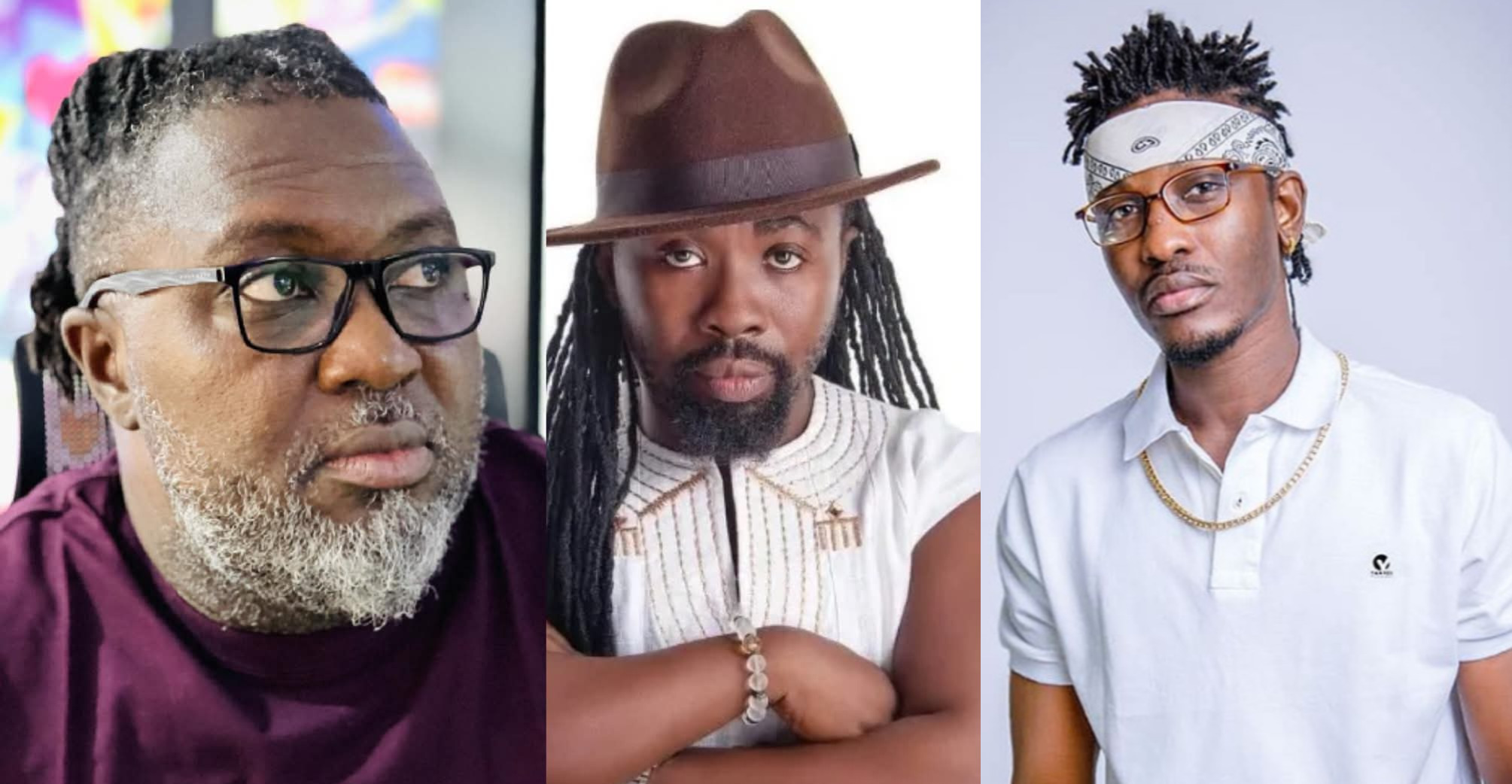
The ongoing exchanges involving Ghanaian rapper Obrafour, legendary music producer Hammer of The Last Two and rapper Tinny appear to have a much deeper background than the public discussion about who discovered whom.
This is being obvious following revelations about an ongoing copyright dispute connected to Obrafour’s $10 million lawsuit against Canadian rapper Drake.
For days, social media has been awash with discussions after Tinny challenged the widely held perception that Hammer discovered him and played a major role in introducing him to the music industry.
Tinny, during an earlier interview on UTV’s ‘Atuu’ explained that he approached Hammer because he admired his production work on Obrafour’s ‘Pae Mu Ka’ album.
He maintained that he sought the producer’s services and that his parents paid for the studio sessions during their working relationship.
The rapper also disputed claims that Hammer was responsible for his decision to rap in Ga, explaining that he had already been making music in Twi and English, with some Ga, before meeting the producer.
Hammer, however, strongly disagreed with Tinny’s account and explained that the money paid by the rapper’s parents covered studio bookings but not the actual production work.
According to the legendary producer, he personally handled the production, arrangement, mixing and mastering of Tinny’s project, while also taking responsibility for transportation expenses and engaging other musicians to contribute to the album.
Hammer further claimed that he approached musicians, including Kwabena Kwabena, M.O.B, Figo and Triple, to work on the project and played an instrumental role in securing a record label for Tinny after several labels had rejected the album.
He also maintained that his involvement in Tinny’s career went beyond producing his songs, insisting that he helped shape the rapper’s musical identity by encouraging him to embrace Ga rap.
Amid the exchanges, Hammer clarified that he had never actually claimed to have discovered Tinny, explaining that the public had developed that impression because of his involvement in the rapper’s career.
Interestingly, a video of Obrafour and Tinny together at the Mövenpick Hotel subsequently surfaced online, with the two exchanging jokes that many social media users interpreted as indirect shots at Hammer.
In the video, Obrafour appeared to suggest that someone had not handled a particular matter properly, while Tinny responded with comments that further fuelled speculation about the ongoing disagreement.
However, the latest information shared by renowned Ghanaian media personality, blogger and host of YFM’s morning show, NY DJ, suggests that the public discussion about who discovered whom could be a distraction from a much bigger issue involving money, ownership and copyright.</WritingBlock}
NY DJ, in a Facebook post sighted by zionfelix.net titled “Hammer v Obrafour – The Crux Of The Matter”, explained that the issues go beyond the discovery debate, alleging that the latest exchanges are connected to a $10 million lawsuit Obrafour filed against Drake over the unauthorised sampling of his 2003 song, “Oye Ohene (Remix)”.
According to the award-winning media personality, Obrafour alleged in April 2023 that Drake sampled the song on his track “Calling My Name” without obtaining the necessary permission.
NY DJ explained that, according to the lawsuit, Drake’s team sent two emails to Obrafour during the release week seeking clearance to use the sampled material. However, the album was reportedly released before Obrafour had the opportunity to respond to the requests.
Obrafour subsequently filed a lawsuit seeking at least $10 million in compensation, including profits and damages allegedly attributable to the infringement. These reportedly covered album sales, downloads, digital revenue, sponsorships and concerts following the release of Drake’s *Calling My Name*.
However, NY DJ’s account highlighted another development that appears to have complicated the legal proceedings.
He disclosed that Mantse Aryeequaye, founder of the Chale Wote Street Art Festival and the voice behind the sampled expression “Killer Cut blood, Killer Cut”, subsequently instituted legal action against Obrafour in a Ghanaian court, claiming ownership of the copyrighted material.
The development reportedly became significant in the American proceedings, as the court in the Southern District of New York was informed about the separate legal action in Ghana.
According to NY DJ, the American court subsequently stayed the proceedings in their entirety pending the resolution of the Ghanaian case. The judge also requested that Obrafour’s lawyer provide updates on the status of the Ghanaian proceedings within specified timelines.
All pending motions and discovery deadlines were also put on hold.
NY DJ further suggested that the copyright dispute has created opposing camps, with Hammer of the Last Two allegedly aligning himself with Mantse Aryeequaye, while Obrafour remains on the other side of the disagreement.
He linked the recent exchanges and social media activities to a court appearance earlier in the week, although the exact developments from that appearance were not immediately clear.
The media personality, therefore, argued that the supposed disagreement should not be reduced to a question of who discovered whom, insisting that the underlying issue is a copyright and financial dispute involving the ownership of the material at the centre of Obrafour’s lawsuit against Drake.
If NY DJ’s account accurately reflects the connection between the recent exchanges and the ongoing legal proceedings, it would mean that the discovery debate involving Tinny and Hammer is only one part of a much bigger disagreement involving some of Ghana’s influential music industry figures.
The situation also raises questions about the ownership of musical works, the rights of original contributors and the importance of properly establishing copyright ownership before pursuing substantial compensation claims.
For now, the legal proceedings in Ghana remain central to the dispute, with their eventual outcome potentially having significant implications for the case involving Obrafour and Drake in the United States.
See NY’s post below…