
Home Blog Page 46

I Am Making Money – King Paluta Defends Ghanaian Music Industry Earnings

0

Ghanaian artiste King Paluta has fired back at claims that most musicians in the country struggle to make a living from their craft.

The controversy began when veteran highlife musician and GHAMRO board Chairman Rex Omar said that roughly 97% of Ghanaian musicians do not earn money from their music.

Paluta acknowledged that Ghana’s creative industry still lacks the infrastructure to fully support artistes financially, but he rejected the idea that most musicians are failing.

“97% of Ghanaian musicians not making any money from their music,” Rex Omar said.

READ ALSO: 97% Of Ghanaian Musicians Earn Nothing – Rex Omar Raises Concern

On X, Paluta defended the industry and pointed to the successes of many artistes, including himself.

“I really don’t understand this. Of course I am making money… Why are we making it look like the game hasn’t been good to us? I still no dey barb. Who are the 99%? People are listening to you, and you are not making money? Ano dey barb,” he wrote.

However, many artistes have long complained about weak royalty systems and low streaming revenues, sparking calls for stronger institutional and government support to create fairer structures for the country’s music industry.

See King Paluta’s reply below.

Quality And Emotion Matter More Than Language In Music – Sarkodie Reveals Why He Raps In Twi

0

Award-winning Ghanaian rapper, Sarkodie, has reaffirmed his commitment to rapping predominantly in Twi, stressing that music transcends language and connects with audiences through quality and emotion rather than words alone.

Speaking in an interview with The Voice ahead of the UK edition of his Rapperholic concert, Sarkodie reflected on his journey as an artiste and his experiences sharing global stages with international stars such as T-Pain, Giggs, Idris Elba, and Miguel.

According to the rapper, those cross-cultural collaborations reinforced his long-held belief that music is a universal language.

“Music is the language,” he said, noting that the phrase has long appeared in his social media biography.

Sarkodie explained that early in his career, he made a conscious decision not to switch to English simply to appeal to a broader international market.

“I wasn’t willing to rap in English because then there wouldn’t be any difference. I wanted to hear my native tongue on big radio stations outside Ghana, and I was able to do that,” he stated.

For the celebrated rapper, the essence of music lies in its technical quality and emotional delivery rather than linguistic accessibility.

“The technical bit of music is that music is music. It just has to be very good,” he explained.

Sarkodie pointed out that audiences often connect deeply with songs even when they do not understand the language. He cited his own admiration for international artistes whose lyrics he may not fully comprehend.

“Some of my favourite artistes, I have no idea what they’re saying, but I still love the music,” he admitted.

He drew parallels with Ghanaian audiences who grew up enjoying American rappers like Eminem and Busta Rhymes despite not fully understanding their lyrics.

“Back home, we listened to Eminem and Busta Rhymes. Even though it was English, most people didn’t understand what they were saying. But it was very good,” he said.

He also referenced Jamaican music, which enjoys global appeal despite its distinct patois.

According to Sarkodie, presentation and emotional connection are what ultimately determine a song’s impact.

“If the music is very good, you’re definitely going to find the right ears for it,” he said. “You have to present it in a way that makes it pleasant for the listener. They have to feel it almost beyond what they’re hearing.”

While acknowledging that language can limit reach in certain markets, he believes artistes must choose what they are willing to sacrifice.

Esther Smith Reveals Shaggy’s ‘Angel’ Inspired Her Hit Song Nsuro

0

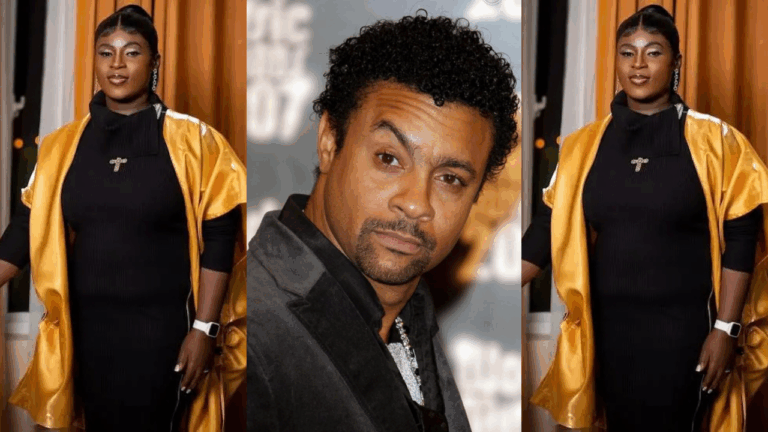
Renowned Ghanaian gospel musician Esther Smith has opened up about the creative inspiration behind her popular song Nsuro, revealing that international dancehall star Shaggy played a significant role in shaping the track’s sound.

In a viral interview with award-winning blogger Kobby Kyei, the celebrated gospel singer disclosed that she drew inspiration from Shaggy’s hit song Angel during her creative process.

According to Esther Smith, the rhythm and musical arrangement of the American-Jamaican artiste’s song influenced the direction of Nsuro, which went on to become one of her most loved tracks.

“There is a musician called Shaggy; that is where I got the inspiration for my ‘Nsuro’ song from. He has a song titled ‘Angel,’” she revealed during the interview.

Her revelation has sparked conversation among music lovers, with many praising her honesty and highlighting how cross-genre influences often shape creativity in the music industry.

Nsuro remains one of Esther Smith’s standout songs, celebrated for its uplifting message and distinctive rhythm.

Xandy Kamel Sends A Piece Of Strong Advice To Alpha Hour Pastor

0

Ghanaian presenter and actress Xandy Kamel has weighed in on the recent arson attempt at Grace Mountain Ministry, a church led by Pastor Elvis Agyemang.

The incident occurred on Tuesday, February 9, 2026, when CCTV footage shared by the founder and convenor of the church showed an unidentified woman allegedly spraying a substance suspected to be fuel inside the church auditorium before setting part of the building ablaze.

Following the development, Pastor Elvis Agyemang announced the temporary suspension of all in-house church activities as investigations continue.

The incident has since sparked intense debate on social media. While some observers have attributed the act to spiritual forces or evil influence, others have suggested that the suspect should undergo a mental health evaluation.

Adding her voice to the discussion, Xandy Kamel shared a video on her official TikTok page, advising the Alpha Hour pastor to take the matter seriously and thoroughly investigate the motive behind the attack.

According to her, Pastor Elvis should not allow external pressure to influence him into forgiving the suspect prematurely.

“Don’t sleep on this or allow people to influence your decision to forgive the suspect. Think outside the box because if your church members were directly affected by the fire, Ghanaians would have accused you falsely,” she stated.

Xandy further urged the pastor to get to the root of the issue and uncover the intentions behind the act.

“Make sure you get to the root of this case and find out the intentions of the lady for which she decided to burn down your church,” she added.

She also expressed concerns about potential future threats, cautioning that if the situation is not handled carefully, it could escalate.

“I believe they have tried you and your wife spiritually and couldn’t succeed, and so they decided to go physical. If care is not taken, the next attack might be on your children, so do not let this slide,” she warned.

https://www.tiktok.com/@xandykamel7/video/7605295217494723862?embed_source=121374463%2C121468991%2C121439635%2C121749182%2C121433650%2C121404359%2C121497414%2C122122240%2C121351166%2C121811500%2C121960941%2C122122244%2C122122243%2C122122242%2C121487028%2C121331973%2C120811592%2C120810756%2C121885509%3Bnull%3Bembed_blank&refer=embed&referer_url=yen.com.gh%2Fentertainment%2Fcelebrities%2F299553-alpha-hour-xandy-kamel-cautions-pastor-elvis-agyemang-attempted-arson%2F&referer_video_id=7605295217494723862

Kwabena Kwabena Gives Vital Advice To Young Artistes Over Record Deals

0

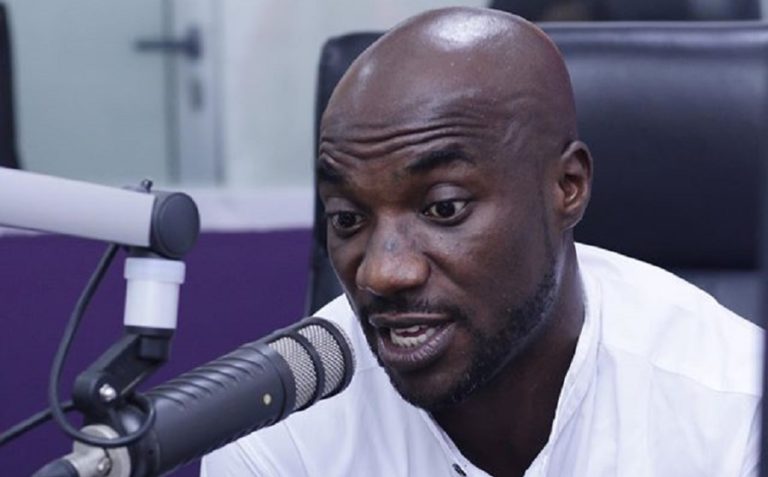
Ghanaian highlife artiste Kwabena Kwabena has joined the ongoing conversation around contract fallouts within the country’s music industry, urging emerging artistes to tread carefully when signing deals.

During a discussion on GhanaWeb’s Talkertainment with Elsie Lamar, the ‘Asor’ singer advised young talents to make legal consultation a priority before committing to any agreement. Although he has never operated under a record label, he noted that contracts are often packed with legal terminology that requires professional interpretation.

“I have never signed to any record label so I probably might not be able to give an experience or a fair idea but the little I’ve studied around is that whenever you’re presented with a contract, the first thing you need to do is to get a lawyer to read the contract and interpret it to you, because every contract is law language,” he explained.

Kwabena Kwabena stressed that individuals must fully understand the obligations tied to any document they endorse, highlighting that signatures come with accountability.

“If you put your signature to a certain contract, you must know that you are fully responsible for whatever consequences it brings,” he advised.

READ ALSO: 97% Of Ghanaian Musicians Earn Nothing – Rex Omar Raises Concern

Touching on the dispute between Ground Up Chale and rapper Kwesi Arthur, the highlife musician declined to take sides. Instead, he said the controversy should spark broader education on contractual awareness rather than emotional reactions.

“In this case, we can neither say party ‘A’ is guilty nor party ‘B’ is guilty. Why am I saying that? Everybody put their interest in the contract. You read it, I read it; you sign, I sign, a witness signs. We must use this opportunity to educate people on what to put my signature under and what not to put my signature under instead of having an emotional understanding of it, because there are no emotions when it comes to law; must we all learn the hard way?” he detailed.

He also acknowledged the advantages record labels can offer artistes, noting that partnerships can create opportunities that may be difficult to secure independently, but insisted legal guidance remains crucial.

“My advice is that, having a label behind you is a good thing, it can open certain doors, it can take you to a certain level which individually you can’t, but please get a lawyer.

“The moment they’re interested in you, it means that they are confident that you can bring in revenue, so you must be interested in that revenue as well,” Kwabena Kwabena further stated.

97% Of Ghanaian Musicians Earn Nothing – Rex Omar Raises Concern

0

Rex Omar has cast doubt on Ghana’s readiness to sustain a thriving music and creative arts sector, arguing that the system continues to fail the very people driving it.

Speaking on Joy Prime during an interview with George Quaye, the GHAMRO board chairman and seasoned musician, described an industry where financial survival remains out of reach for most performers. He stressed that only a small number of artistes achieve commercial success, leaving the majority struggling to turn their talent into a stable livelihood.

“Ghana is not ready to support music, up to today. I can tell you that 97 per cent of Ghanaian musicians are not making money,” he said.

He indicated that while the visibility of successful stars encourages young creatives to enter the field, many do so without understanding the commercial realities that underpin long term success. According to him, the enthusiasm that pushes people into music often lacks the financial structure required to sustain careers.

“They go into music out of passion. But the business aspect of it that will sustain them is zero,” he said.

READ ALSO: Sista Afia Recalls Battling Homelessness In UK Before Returning To Ghana

Rex Omar also signalled his intention to relinquish his leadership position at GHAMRO, attributing the decision to prolonged delays in constituting a new governing board. He indicated that his main objectives at the organisation have largely been achieved.

“Technically, I’m still there as chairman, waiting for them to do elections so that I can hand over and leave. I’m thinking of leaving this month (February) because what I went there to do is finished. We went to digitise GHAMRO, and I’m going to launch it, and I’ll leave,” Rex Omar explained.

He extended his criticism beyond GHAMRO, pointing to what he described as systemic weaknesses within Ghana’s intellectual property and creative industry structures. In his view, the lack of strong state involvement continues to undermine collective management organisations and the broader creative economy.

“Ghana is still not ready. Look at our IP industry. Now go to the corporate office. The reason why all our CMOs are suffering is that the role that the state must play and take it seriously is still not being done,” Rex Omar stated.

Sista Afia Recalls Battling Homelessness In UK Before Returning To Ghana

0

Before rising to fame in Ghana’s music scene, Sista Afia faced a difficult chapter of her life while living in the United Kingdom, where she struggled to stay afloat despite working as a nurse.

Speaking in an exclusive interview with ZionFelix, the ‘Jeje’ singer opened up about the emotional and financial challenges she encountered during her stay abroad.

She disclosed that mounting rent problems left her without stable accommodation, forcing her to rely on temporary shelter from friends and, at times, her car. She explained that she packed her belongings into her vehicle and used it as a place to sleep whenever she had nowhere else to go.

READ ALSO: Kwabena Kwabena Discloses The Unlikely Place Where “Aso” Was Written

The Ghanaian singer recalled that the period was marked by overwhelming frustration and depression at a young age, adding that she felt so desperate that she would have accepted any opportunity to relocate elsewhere. She stated that returning to Ghana eventually became her only practical choice.

Sista Afia described her decision to move back home as life-changing. Upon her return, she said she experienced a renewed sense of direction and emotional stability.

She recounted that settling in Ghana was comfortable and enjoyable, noting that she had access to a family house, which spared her the housing difficulties she endured abroad.

Afia also mentioned reconnecting with school friends, a development that significantly boosted her happiness and helped her regain confidence as she prepared to pursue her music career.

Watch the interview below.

Abu Trica Sues Interior Ministry, Security Agencies Over Alleged Rights Violations

0

Ghanaian socialite Abu Trica has reportedly filed a lawsuit against the Ministry of the Interior and several law enforcement agencies, challenging the legality of his arrest and continued detention amid ongoing international fraud investigations.

According to an Instagram post shared by Accra-based broadcaster TV3 Ghana on Monday, Abu Trica has initiated legal action against the Ministry of the Interior, the Narcotics Control Commission (NACOC), the Economic and Organised Crime Office (EOCO), and the United States Federal Bureau of Investigation (FBI).

The suit reportedly questions the circumstances surrounding his arrest and prolonged detention, alleging that his fundamental human rights have been violated as legal proceedings continue.

Abu Trica, whose real name is Frederick Kumi and also known as Emmanuel Kojo Baah Obeng, was rearrested by officers of NACOC shortly after his most recent court appearance on Wednesday, January 28, 2026.

He has remained in custody since December 11, 2025, following his arrest during a joint operation involving the FBI and Ghanaian security agencies.

In a statement released after his arrest, the United States Department of Justice alleged that Abu Trica was part of an organised criminal network accused of orchestrating romance scam schemes targeting elderly individuals across the United States.

Authorities claim the alleged syndicate has been active since 2023 and is believed to have defrauded victims of more than $8 million.

Investigators further allege that members of the group used artificial intelligence tools to create fake identities and build emotional relationships with unsuspecting victims, primarily through social media and online dating platforms.

Once trust was established, victims were allegedly persuaded to transfer money and valuables under the pretext of medical emergencies, travel expenses, or investment opportunities.

Abu Trica is alleged to have played a role in facilitating the movement and distribution of the proceeds from the United States to Ghana and other jurisdictions.

The investigation was reportedly led by the FBI’s Cleveland Division, with support from Ghana’s Attorney-General’s Department, EOCO, the Ghana Police Service, the Cyber Security Authority (CSA), NACOC, and the National Intelligence Bureau (NIB).

“3rd March” – Massive Excitement As Nana Agradaa’s Lawyer Hints At Possible Early Release Date

0

Lawyer Richard Asare Baffour, counsel for controversial Ghanaian televangelist Nana Agradaa, has sparked excitement online after disclosing a possible early release date for his client.

Nana Agradaa, born Patricia Asiedua, was sentenced to 15 years in prison on July 3, 2025, by an Accra Circuit Court. She was convicted on two counts of defrauding by false pretences and one count of charlatanic advertisement.

The conviction stemmed from a 2022 church service during which she allegedly advertised a money-doubling scheme that prosecutors argued was used to defraud members of her congregation.

Following her sentencing, the preacher filed an appeal at the Amasaman High Court, contending that the 15-year jail term was excessive.

Her legal team also argued that the trial judge demonstrated bias and failed to properly apply the law in delivering the sentence.

On Thursday, February 5, 2026, Nana Agradaa appeared before the Amasaman High Court for the ruling on her appeal. After reviewing the case, the court reduced her sentence from 15 years to 12 months on counts two and three.

The decision immediately triggered widespread speculation on social media regarding when the televangelist could regain her freedom. Based on her original sentencing date of July 3, 2025, some observers initially projected a possible release in July 2026.

However, in a recent interview, Lawyer Richard Baffour further shortened the expected timeline. According to him, Nana Agradaa could be released from the Nsawam Prison as early as March 3, 2026.

His comments have since generated jubilation among her supporters, who have taken to social media to express excitement over the possibility of her imminent return.

Further official confirmation from prison authorities is expected to clarify the exact date of her release.

Bullgod Opens Up About ‘Harsh And Demoralising’ Experience In Police Custody

0

Ghanaian artiste manager, Bullgod, has opened up about his time in police custody, describing the experience as harsh, emotionally draining, and mentally destabilising.

Speaking in an interview on 3Music, Bullgod recounted the difficult conditions he endured while in detention, shedding light on what he described as the reality of life inside police cells.

Reflecting on his experience, he revealed that inmates often turned to prayer as a coping mechanism during their time behind bars.

“I remember my time there. We usually prayed around 3 am, and the prayers were centred on God striking the police, judges, or any law enforcement officers because most of them believe they are innocent of what put them there,” he said.

According to Bullgod, many detainees feel powerless within the justice system and strongly believe they have been treated unfairly.

He also raised concerns about prolonged detentions, alleging that some individuals are kept in police cells far beyond the legally permitted 48-hour period without being transferred to appropriate correctional facilities.

“Unfortunately, some places that are supposed to hold you for just 48 hours end up keeping people for much longer,” he stated.

“If the law requires you to be held, you are transferred to a prison, but some people stay in a cell for a month without seeing sunlight.”

Bullgod noted that such extended confinement takes a significant toll on the mental and emotional well-being of detainees.

“It breaks you. You don’t think normally anymore,” he added.

Describing the physical conditions inside the cells, the artiste manager said the environment can be overwhelming, especially for first-time detainees.

“The first feeling you get when you enter the cell is the desire to get out because a stench greets you,” he explained. “You suddenly realise how valuable freedom is.”

His comments have sparked renewed conversations about detention conditions and due process within the justice system, as he joins others who have called attention to the treatment of individuals held in police custody.